

Key Takeaways
- Glasses that fit well sit level, stay put, and feel light on your nose and ears.
- Your pupils should sit near the centre of each lens, with your eyebrows visible above the frames.
- Sliding frames, red marks, and sore ears are all signs that the fit needs attention.
- The three numbers printed inside the temple arm give you your lens width, bridge width, and temple length in millimetres.
- An optometrist in Mississauga can adjust your frames and check your vision if headaches keep showing up.
What a Good Fit Actually Feels Like
You push your glasses up your nose. Again. That’s the fourth time since breakfast, and it’s only 9 a.m. Meanwhile, there’s a tender red dent on either side of your nose, and your ears feel pinched.
Glasses fit your face properly when they sit level across your eyes with your pupils centred in each lens, rest gently on your nose without pinching or sliding, clear your cheeks when you smile, and hug the sides of your head so that they stay put but you forget they’re there.
Our team at Queensway Optometric Centre can help you find frames that fit your features and keep your vision comfortable.
Why Frame Fit Matters for Your Comfort & Vision
When frames slip down your nose, your eyes end up looking through the tops of your lenses instead of the middle. This can leave you with tired eyes over the course of the day, and for some people, it may even contribute to a dull headache behind the brows.
Frames that fit stay where you put them. You should be able to look down at your phone, jog up the stairs, or laugh at a bad joke without having to nudge your glasses back into place.
Fit also shapes how clearly you see. Lenses only do their job when they’re sitting correctly in front of your eyes, so a small shift can make a big difference in how well they correct your vision.
How Glasses Should Sit on Each Part of Your Face
Eyes & Eyebrows
Look straight into a mirror. Your pupils should sit close to the centre of each lens, not off toward the inside or resting near the top rim.
Your eyebrows should stay visible above the frames. If your eyebrows disappear behind the top of the frame, your glasses are likely sitting too high on your face.
Nose & Cheeks
The bridge of your glasses should rest gently across your nose without pinching, sliding, or leaving deep grooves behind at the end of the day.
Frames also need a little breathing room above your cheeks. Smile wide in the mirror, and if your cheeks push the frames up or the bottom rim brushes your skin, the fit needs adjusting.
Ears & the Sides of the Head
The temple arms should follow the sides of your head and rest lightly on the tops of your ears. You shouldn’t feel squeezing at your temples, and the frames shouldn’t wobble when you nod or shake your head.
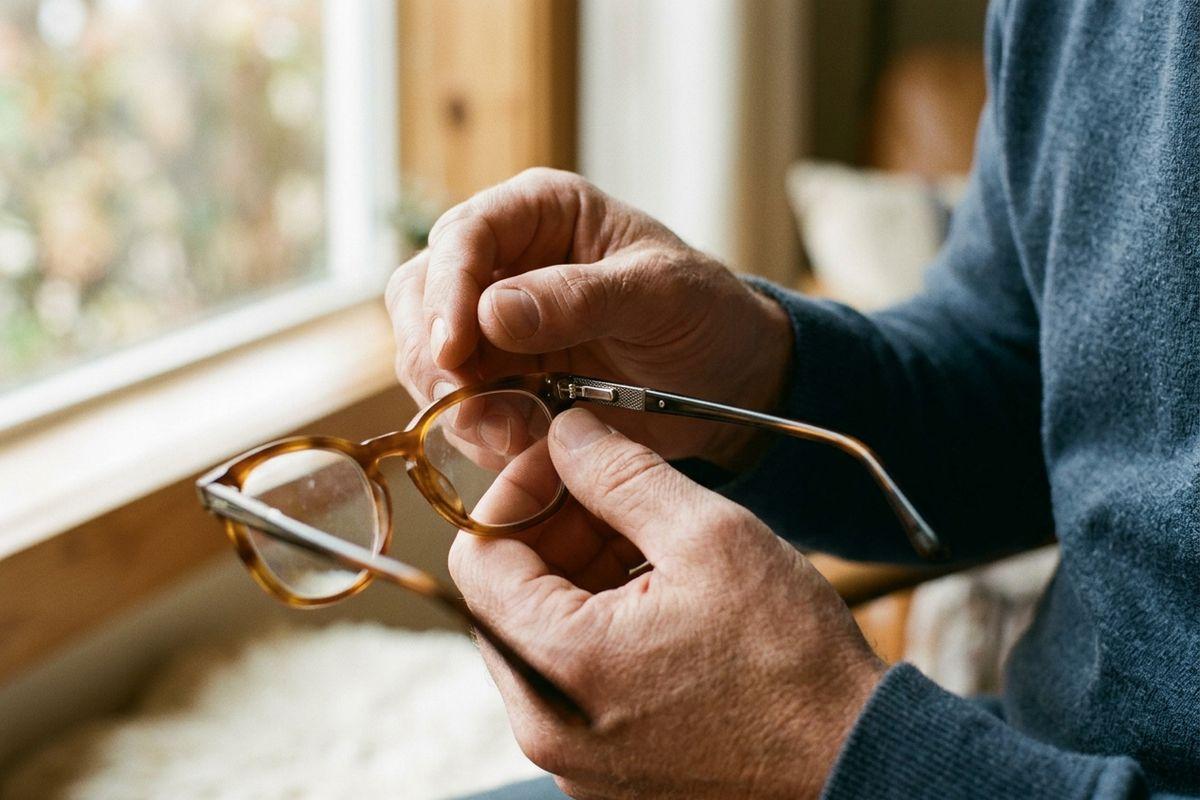
Signs Your Glasses Don’t Fit Right
Here are some signs that your glasses don’t fit you correctly:
- Your frames slide down your nose whenever you look down.
- Red marks show up on your nose or behind your ears.
- Your ears feel sore or tender after a few hours of wear.
- Your frames leave gaps at your temples, slip constantly, or stretch past the edges of your face.
- Your frames squeeze your temples and/or leave your eyes sitting off-centre in the lenses.
Frame Measurements & What the Numbers Mean
The 3 Numbers Inside Your Temple Arm
Flip open the arm of your current glasses and look along the inside. You’ll find three small numbers, usually something like 52-18-140.
Those are lens width, bridge width, and temple length, all in millimetres. They’re a handy guideline when you’re browsing new frames, since a new pair with similar numbers tends to feel comfortable right away.
Pupillary Distance
Pupillary distance is the space between the centres of your pupils. It’s also measured in millimetres. This number helps position your lenses so that they’re centred in front of your eyes.
How an Optometrist in Mississauga Can Help with Fit
Adjusting your frames at home rarely goes well.
Bending frames yourself at the kitchen table rarely ends well. On the other hand, our optical team can warm and adjust your frames, tweak the nose pads, and reshape the temple arms. Most adjustments take just a few minutes.
Whether you just need to check the fit on your current glasses or are looking for frames you’ll enjoy wearing, our team at Queensway Optometric Centre in Mississauga is here to help. Book an appointment today and let comfortable, clear vision be one less thing that you have to think about.