
Key Takeaways
- Myopia occurs when the eye grows too long, causing distant objects to appear blurry.
- Standard glasses correct vision but don’t help slow eye growth.
- Myopia control glasses, like MiYOSMART lenses, can help slow progression.
- Other options include atropine drops, MiSight® 1 day and Abiliti® soft contact lenses, and orthokeratology (ortho-k) lenses.
- Daily habits like outdoor time and the 20-20-20 rule can also support eye health.
When your child starts squinting at the whiteboard or moving closer to the TV, it is time to look into their eye health. A diagnosis of myopia is common (it affects up to 30% of Canadians) but that does not make it any less significant when it is your child. At Queensway Optometric Centre in Mississauga, we help families navigate this stage by shifting the focus from simple correction to active management.
It is important to understand the difference in technology: while standard glasses simply bend light to land correctly on the retina, myopia control glasses provide an additional layer of support. By sending specific signals to the eye, these lenses can help slow the progression of myopia itself. Understanding this distinction is the first step toward safeguarding your child’s long-term vision.
What Myopia Actually Does to Your Child’s Eyes
Myopia isn’t just about blurry distance vision. It happens because the eye grows too long from front to back. When that occurs, light coming in from far away focuses just in front of the retina instead of directly on it. The result is that a stop sign across the street looks fuzzy, but the book in your child’s lap typically stays perfectly clear.
Children’s eyes are still developing, which means myopia often gets worse each year as the eye continues to grow. That’s not just an inconvenience. It’s a reason to act sooner rather than later. Global research also projects that myopia prevalence could affect nearly half the world’s population by 2050, making early detection more important than ever.
Why Correcting Vision Is Not Always Enough
Myopia Tends to Progress Over Time
Standard glasses do their job well. They correct the blur and help your child see the board at school. But they don’t do anything about the underlying eye growth that keeps pushing the prescription higher year after year. A child who starts at a mild prescription at age 7 can end up with a much stronger one by the time they’re in high school.
Risks Linked to High Myopia
Higher prescriptions aren’t just a matter of thicker lenses. When myopia reaches more severe levels, it raises the chances of developing serious eye conditions later in life, including retinal detachment, glaucoma, and cataracts. Slowing the progression now can help reduce those risks down the road. A closer look at the complications associated with high myopia shows just how meaningful early action can be.
Regular children’s eye exams are one of the most reliable ways to catch and monitor progression before it gets harder to manage.
How Myopia Control Glasses Work Differently
What Sets These Lenses Apart
Myopia control glasses have two jobs. The central zone works like a regular lens and corrects your child’s vision so they can see clearly. The outer, peripheral zones do something different. They change the way light hits the edges of the retina, which sends a signal to the eye that can help slow down its growth. It’s a small but meaningful difference in design.
MiYOSMART Lenses: A Closer Look
One option our team may discuss with you is MiYOSMART lenses. These use a technology called DIMS, which stands for Defocus Incorporated Multiple Segments. Research has shown that these lenses can slow myopia progression by around 60% compared to standard lenses. They look like regular glasses, so your child won’t feel like they’re wearing anything unusual.
Other Myopia Control Options Worth Knowing
Glasses aren’t the only path forward. Depending on your child’s age, prescription, and lifestyle, an optometrist in Mississauga might also talk to you about these alternatives:
- Low-dose atropine eye drops, which help relax the focusing muscles in the eye
- MiSight® 1 day contact lenses, daily disposable soft lenses designed with dual-focus technology to help slow myopia progression in children.
- Abiliti® soft contact lenses, another myopia management option designed for children. Available in different designs depending on your child’s needs, these lenses help correct vision while supporting myopia control as part of a personalized treatment plan.
Each option has its own advantages, and the right fit depends on your child’s age, prescription, eye health, and lifestyle. During your child’s eye exam, we’ll discuss whether MiSight®, Abiliti®, myopia control glasses, atropine drops, or ortho-k may be the best approach.
Everyday Habits That Support Your Child’s Eye Health
The 20-20-20 Rule
Every 20 minutes of close-up work, whether that’s reading, homework, or screen time, your child should look at something about 20 feet away for 20 seconds. It gives the focusing muscles in the eye a short break and can help reduce strain over a long day of learning. The 20-20-20 rule is a simple habit that’s easy to build into any daily routine.
Simple Lifestyle Shifts That Help
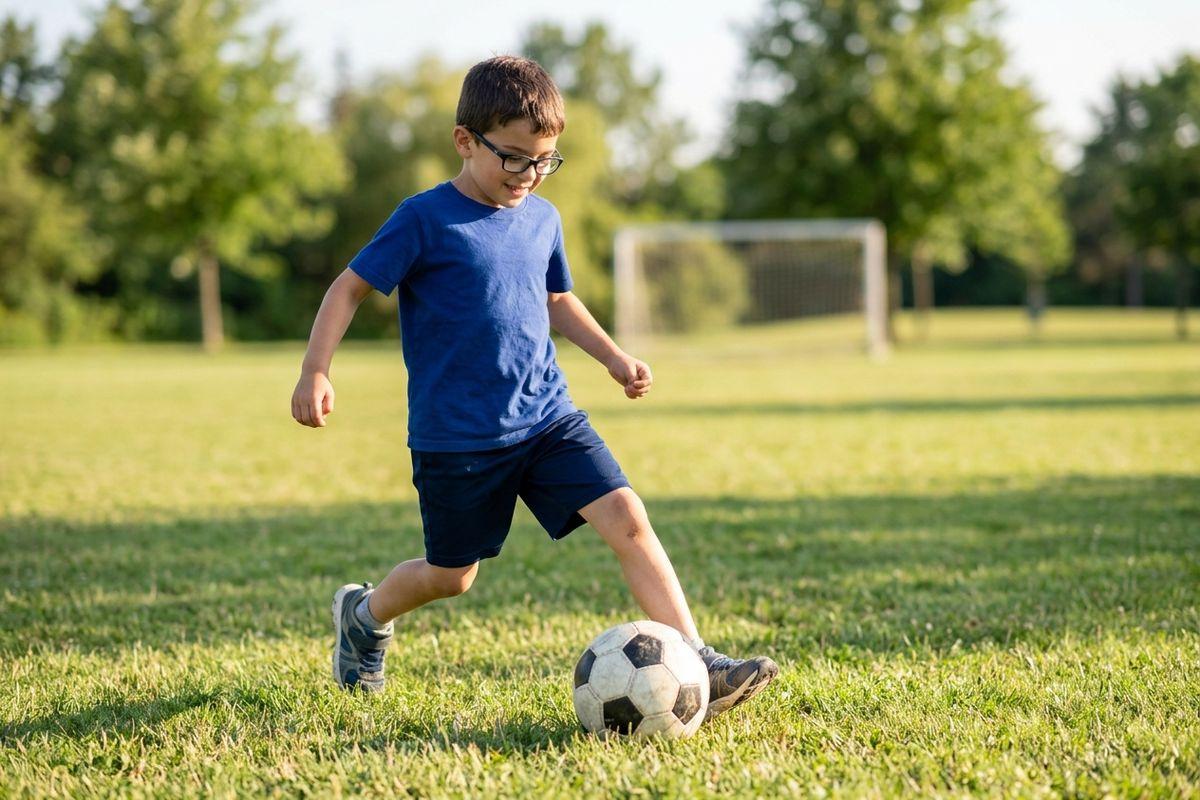
More time outdoors is one of the most supported habits when it comes to slowing myopia progression. Natural light plays a role in healthy eye development, and outdoor activity gives the eyes a chance to focus at a distance rather than up close.
Research into outdoor time and myopia risk points to bright light exposure as a key factor in reducing progression in children. Where possible, it also helps to break up long screen sessions throughout the day rather than letting them run for hours at a stretch.
We Can Help
If your child has been squinting, complaining about headaches, or sitting closer to screens than they used to, it’s worth getting their eyes checked.
Our team at Queensway Optometric Centre in Mississauga can assess your child’s vision and walk you through the myopia control options that fit their needs. Book an eye exam today and take that first step toward protecting their sight for years to come.